Based in Amsterdam and led by GM Xander van Baarsen, Rhino is the global #1 in remote energy & utility monitoring. You may not have heard of them, but leading companies around the world, such as Westfield and BNP Paribas Real Estate are already well aware.
You might be thinking to yourself, “if i’ve never heard of them, then how did the European PropTech Association discover them?” Well, we were beyond grateful to have been presented their amazing solutions firsthand, as they were previous European PropTech Association Startup & Scale-up competition participants way back in 2023!
The core of the Rhino solution
The company specializes in centralizing complex utility data for commercial real estate portfolios. Unlike traditional manual reporting methods, Rhino provides a “single source of truth” for electricity, gas, and water consumption. Building owners and facility managers alike will understand just how game-changing this is.
Their platform is specifically designed to help real estate businesses meet stringent ESG compliance standards while simultaneously driving down operational costs through real-time efficiency.
In basic terms? An end-to-end monitoring platform that delivers live insights via a centralized dashboard. By automating data collection, Rhino eliminates the manual errors and fragmented setups typical of legacy property management. Modern innovative real estate might start here.
A key differentiator is that the platform is hardware and protocol agnostic; it integrates seamlessly with any existing utility meter or Building Management System (BMS). This “open platform” approach ensures that data can be easily fed into third-party tools, ESG dashboards, or internal APIs, giving stakeholders a granular view of building performance across their entire global portfolio.
What Impact are Rhino Having?
Let’s start with the general. Rhino’s impact is evidenced by the massive volume of resources currently under its watch. Globally, the platform monitors:
- 1.5 Million MWh of electricity per year.
- 29 Million m³ of gas per year.
- 3 Million m³ of water per year.
For those not already using Rhino, you can use their energy saving calculator to see what potential savings you could be making. If this is too much hassle, then just take a look at the savings for others. A 39% reduction in utility consumption with their Bouwinvest’s ‘Het Dok’ in Amsterdam! Who said gamification was dead?
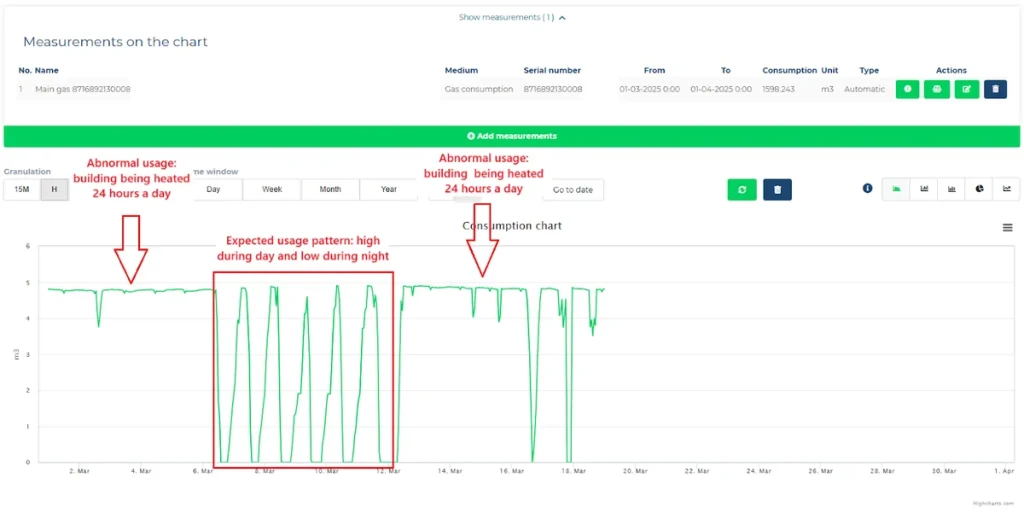
Their system discovered how one location had a projected overuse of 2,300 m³ of gas month to month. It sounds small, but this is the equivalent to an additional cost of over €3,000 in just one month.
It doesn’t stop there. They spotted weekend electricity spikes, heating outside of business hours, equipment left running after hours and so much more.
Case Study: Optimizing Global Logistics via Real-Time Utility Intelligence
Their impact gets more interesting when you dig into just a few of their success stories. GLP partnered with Rhino to implement a comprehensive remote utility monitoring solution across 24 warehouses.
The project involved connecting 1,660 smart meters to capture over 160,000 daily data points, unifying data from legacy buildings, new constructions, and existing Building Management Systems (BMS) into a single dashboard.
By integrating sub-metering with main billing meters, GLP gained the transparency needed to identify faults, automate tenant billing, and optimize the procurement of “green” energy.
This digital upgrade has not only streamlined operations but also provided tenants with real-time tools to manage their own consumption, directly supporting GLP’s global commitment to decarbonization and high-standard, efficient leased spaces.
Read the full GLP success story here.
The technology behind Rhino’s work
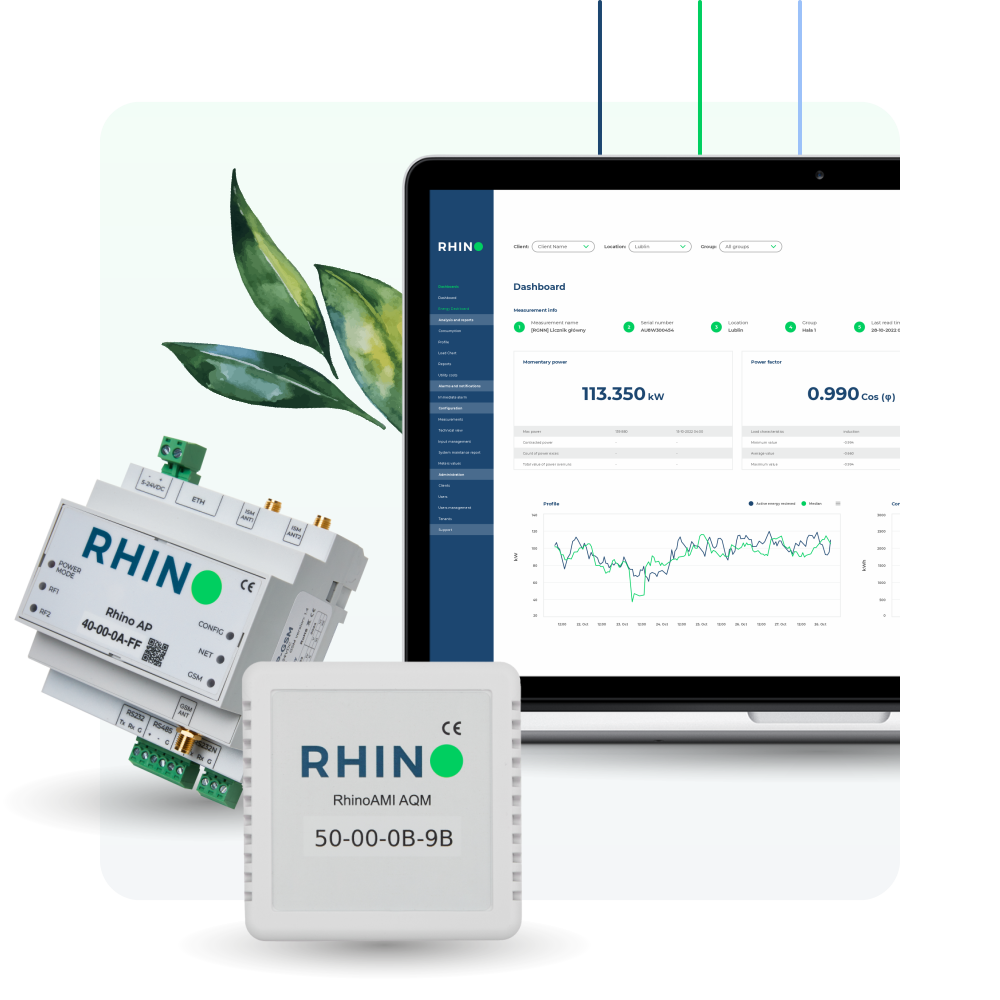
Beyond simple data visualization, Rhino offers tools to mitigate risk and reduce waste. The platform includes automated alerts for water and gas leak detection, as well as peak demand monitoring to help owners avoid costly grid penalties.
To ensure high-quality data, Rhino also provides a suite of proprietary, non-intrusive hardware, such as access points and sub-metering sensors, that can be installed with minimal disruption to tenants.
This approach allows Rhino to bridge the gap between old and new. Rhino Access Points connect directly to main meters and existing Building Management Systems, while the Rhino EDs enable precise sub-metering at any level of granularity.
Because these tools are designed to work with legacy meters without the need for expensive retrofits, owners can achieve a complete, real-time dataset across their entire portfolio with minimal disruption.
Beyond utility consumption, Rhino has reach into building wellness too through advanced environmental sensors. By tracking air quality (AQM), temperature, and humidity, these sensors provide a holistic view of building health alongside performance. Scalable sub-metering and health-focused data allow for optimisation of operations for efficiency while simultaneously creating healthier, more sustainable environments for tenants.
Wider Significance for Europe
For those already dealing with energy prices soaring, energy prices and the below statistics are not news nor new. It is a daily operational struggle in the short term, though. And long term? An existential concern depending on how long you think about it and how little changes a business owner may have made in the last decade.
Keeping the broader European energy landscape in focus is essential. To that effect, we have listed a few standout stats below that caught our eye over the past few weeks. When we compare the potential savings offered above to the current state of EU utilities, it is clear we still have work to do and so much potential.
- Electricity prices for non-household consumers in the EU rose by 0.9% in the first half of 2025 compared to the same period in 2024.
- The Commission forecasts €1.2 trillion will be needed to revamp the bloc’s grid infrastructure by 2040.
- The water sectors energy consumption is projected to more than double by 2040.
- Most EU member states will need to spend between €500 and €1,000 more per person in total by 2030 on water supply and sanitation just to comply with existing water regulations.
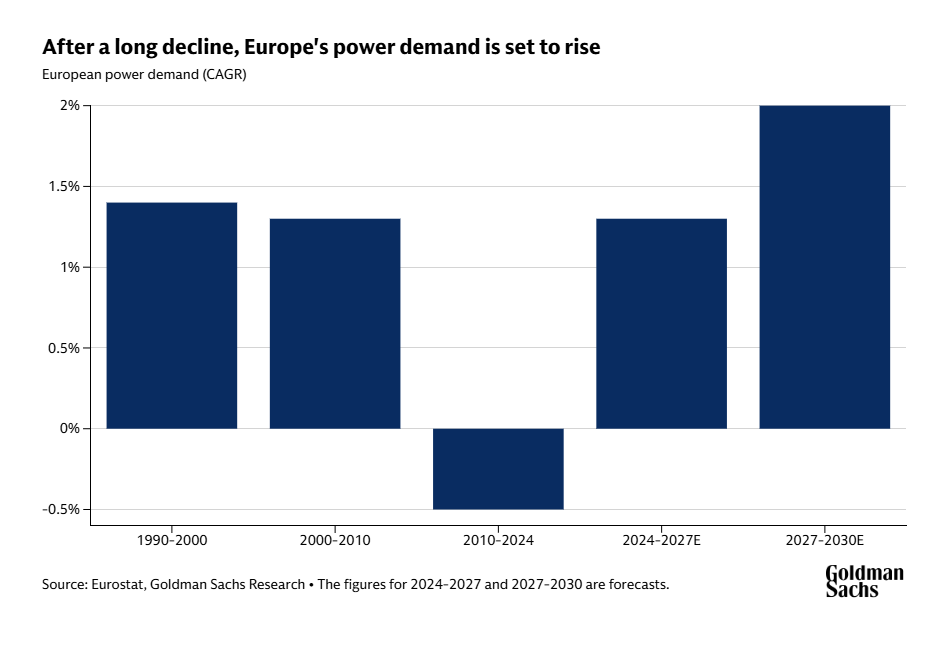
- Analysts at Goldman Sachs forecast power demand will grow 1.5-2% per year from 2026.
- Global water demand could outstrip supply by 40 percent in the next five years.
- Regulators estimated that up to 50% of renewable hydrogen’s production costs are linked to electricity prices.
The above statistics aren’t there to shock you into acting. Thankfully, the CSRD and the SFDR has been enough to twist the arms of decision makers to take the first steps. Worried citizens, customers, states, stakeholders, consumers, parents, grandparents and observers of the weather in general are also shaping the minds and the souls of companies.
Regardless of Europe’s latest ESG overhaul, the above statistics & legislation remains something of a compass for us all, from residential to commercial. If global water bankruptcy is just one small example of the deadly stick, then New Zealand’s near self-sufficiency is the carrot.
Forget spheres of influence. Rhino, Akanthas, Lumoview, Lookthrough, Viboo and many others are providing innovative solutions to complex problems we must solve in our lifetime. From energy optimization to circular renovation, their work and the commitment of so many others is driving tangible impact by aligning cutting-edge technology with Europe’s ambitious sustainability standards.
The common thread here is that the wait and see approach is no longer a viable business strategy nor a good enough excuse. Whether it’s Rhino’s actionable data or NORNORM transforming a landfill liability into a flexible service, the goal is the same: enabling a smarter, leaner, and more resilient Europe. These aren’t just “nice-to-haves” anymore. They are becoming the tools meeting the demands of tomorrow and the responsibility of real leaders to implement.
